How much extra work does a SNAP token program add to market day?
Accepting SNAP at a farmers market is worth doing, and it is more paperwork than people expect. Here is what the workload actually looks like and how to keep it manageable.
What a token program involves
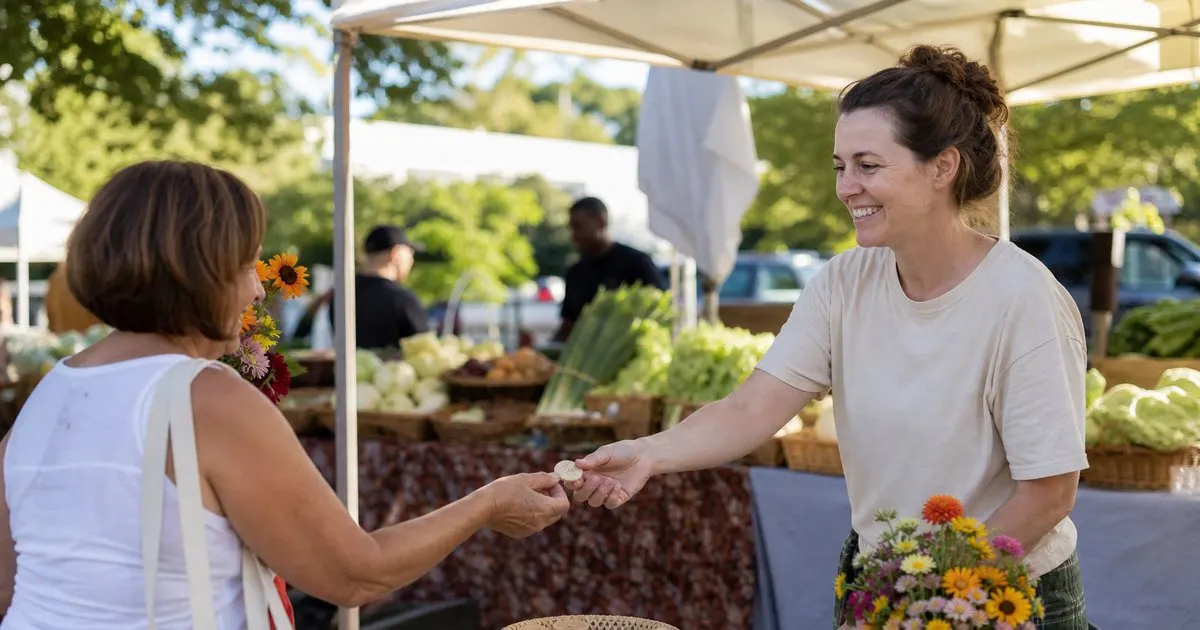
SNAP benefits are loaded on an EBT card, and most individual vendors do not have the equipment or authorization to swipe one. The common solution is for the market itself to become an authorized SNAP retailer, run one card terminal at a central booth, and give the shopper tokens or scrip worth the amount they choose to spend. The shopper hands tokens to vendors for eligible foods, and the market reimburses vendors for the tokens they collect. Many states and localities add a nutrition incentive that matches some portion of SNAP spending with additional tokens for fruits and vegetables.
That structure creates three streams of work. Before the season, the market applies for authorization with the USDA Food and Nutrition Service, obtains a terminal, and trains vendors on which items are eligible. During market day, someone staffs the booth, runs the terminal, issues tokens, and answers questions. After market day, someone counts tokens by vendor, reconciles them against the terminal report, and pays vendors out. None of these steps is difficult, but every one of them has to happen every market day. Related: Running a Farmers Market Without the Clipboard
Keep reading: Running a Farmers Market Without the Clipboard, Fair Stall Allocation, Keeping Vendors Happy. See how StallBookr helps you stall booking and sales logging for farmers markets.
The market-day workload, honestly
The booth needs one trained person for the whole market, and ideally a second during the busiest hour. Transactions are quick, but the person also handles incentive tokens, explains the rules to new shoppers, and fields the vendor who wants to know whether their jam is eligible. Expect the booth to be busiest at opening and to have long quiet stretches, which makes it a good post for a volunteer who can also handle general information duties. Related: Fair Stall Allocation
Vendors add their own small routine: keep SNAP tokens separate from cash, do not give change on SNAP tokens, and hand the tokens in at close with a simple count. The most common friction is vendors forgetting to turn tokens in, then presenting a pile three weeks later, which makes the weekly reconciliation impossible to close. A firm rule that tokens are redeemed the same day or at the next market, with a written count, keeps that under control.
Reconciliation and payout
After each market, the terminal report tells you how much SNAP was processed and therefore how many tokens should be in circulation. Count what vendors turned in, record it by vendor, and compare the two. The numbers rarely match to the dollar because shoppers hold tokens for the next week, so track the outstanding balance rather than chasing a perfect zero. Incentive tokens need a separate count because they are funded from a different source and often reported to a different funder. Related: Keeping Vendors Happy
Pay vendors on a fixed cycle, whether weekly or every two weeks, by check or electronic transfer, and give each vendor a statement showing the tokens counted and the amount paid. A statement resolves nearly every dispute before it starts. If your booking or sales-logging tool can record token counts by vendor and market day, the payout statement is a report rather than a spreadsheet you rebuild every week; StallBookr users log token counts at checkout for exactly this reason. Related: Tracking Stall Fees Cleanly
Deciding whether the effort is worth it
For most markets it is. A token program brings in shoppers who otherwise would not come, and incentive matching typically means those shoppers spend more on produce than they would elsewhere. The sales those programs generate show up in your logs and in your grant applications, and funders who support incentive programs want to see the redemption data that the reconciliation produces anyway.
The honest cost is a reliable person for the booth every market day and roughly an hour of reconciliation afterward, plus the setup work in the first year. Markets that struggle are the ones where the booth is staffed by whoever is free and the reconciliation is done whenever someone gets to it. Assign the roles by name, write the procedure down, and the program becomes routine within a month.
- A token program means one central terminal, tokens issued to shoppers, and vendor reimbursement by the market.
- Budget one trained person at the booth all market day, plus roughly an hour of reconciliation afterward.
- Track the outstanding token balance instead of chasing a perfect match, and count incentive tokens separately.
- Pay vendors on a fixed cycle with a written statement, and require same-day or next-market token turn-in.

Julien Jimenez
Julien Jimenez is an independent software builder based in Paris. He designs, ships, and operates focused SaaS products for small businesses and independent professionals. Read the full author page.
Run your market without the clipboard
Stall booking and sales logging for farmers markets. StallBookr is built to help you put this into practice.
Open bookingsMore from the StallBookr blog
Running a Farmers Market Without the Clipboard

Fair Stall Allocation

Keeping Vendors Happy
Get the StallBookr playbook
Practical guides on market management, straight to your inbox as we publish them. No spam, unsubscribe any time.